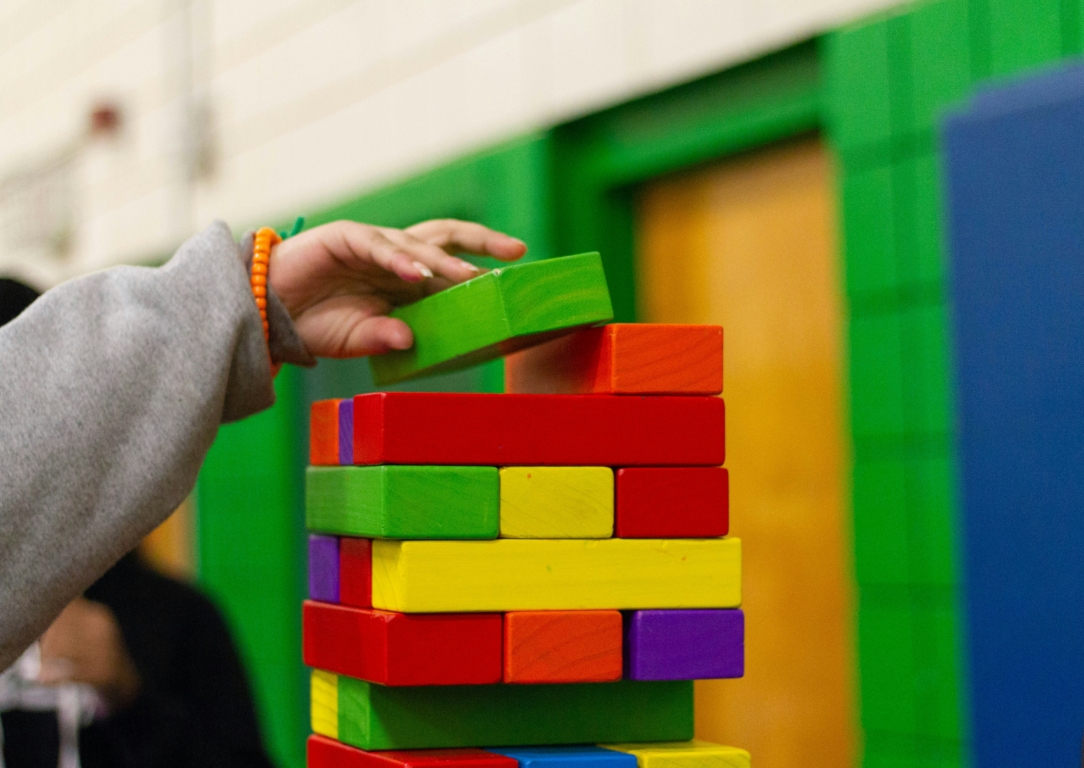


What is Child-Led Learning?

What is Child-Led Learning?
If you have been researching education options for your child, you have probably come across the term child-led learning. It is often mentioned alongside Montessori education, but it can sound vague until you see what it looks like in a real classroom.
Child-led learning is an approach where children take an active role in their learning. Rather than being told exactly what to do at every moment, children are supported to choose purposeful activities, explore ideas, and build skills in a way that matches their developmental stage. The goal is not to let children do anything they want. The goal is to build independence, focus, and a genuine love of learning within clear boundaries.
In practice, child-led learning works best in environments designed for it. That is why it aligns so naturally with Montessori.
What child-led learning looks like in practice
In a child-led classroom, the learning environment is carefully prepared so children can make meaningful choices. Activities are set up to be inviting, hands on, and developmentally appropriate. Children select work, complete it, pack it away, and then choose their next task.
Educators guide the process by observing, presenting lessons when a child is ready, and supporting children to extend their thinking. Over time, children learn how to manage themselves, how to persist through challenges, and how to take pride in completing work well.
You will often see children:
- Choosing work independently from a set of curated options
- Working for sustained periods without being interrupted
- Repeating activities until they feel confident
- Collaborating naturally when the task calls for it
- Developing strong routine, responsibility and self control
Why child-led learning is effective
Children learn best when they are engaged. Child-led learning builds engagement by making learning active rather than passive. When children have ownership over their work, they are more likely to concentrate, persist, and enjoy the process.
It also supports skills that matter far beyond the classroom, including:
- Independence
- Problem solving
- Curiosity and creativity
- Communication and social development
- Intrinsic motivation, meaning children want to learn because learning feels meaningful
This does not mean educators step back. It means educators step in at the right moments, with the right lesson, so progress is steady and supported.
Child-led learning vs traditional classrooms
In a more traditional classroom model, children often move through the same task at the same time. This can work well for some learners, but it can also create gaps. Some children are ready to move on and become bored. Others need more time and feel rushed.
Child-led learning is different because it allows children to:
- Work at their pace
- Spend longer where they need practice
- Move forward when they are ready
- Build mastery before adding complexity
That is one of the reasons many families exploring alternative schooling options are drawn to Montessori. It offers structure, but the structure is built into the environment rather than being enforced through constant direction.
Examples of child-led learning in a Montessori setting
Here are a few common examples of how child led learning shows up in a Montessori classroom.
Practical life activities
Children might choose pouring, polishing, food preparation, or care of the environment tasks. These build coordination, concentration, responsibility, and independence.
Sensorial learning
Children choose materials that help them refine their senses and understand concepts like size, weight, texture, colour, and sound. This supports future learning in language and mathematics.
Language activities
Children may select sound games, letter work, reading materials, or writing activities based on their readiness. The educator presents lessons progressively as skills develop.
Mathematics materials
Children choose hands on resources that make abstract ideas concrete, building deep understanding rather than memorising steps.
The consistent theme is choice with purpose. Children are not choosing entertainment. They are choosing meaningful work within a thoughtfully prepared environment.
The role of the educator
A common question from parents is whether child led learning means children are left to their own devices. In quality Montessori environments, the opposite is true.
Educators are highly active. They:
- Observe children closely
- Introduce lessons at the right time
- Guide behaviour and maintain clear expectations
- Support social development and respectful communication
- Help children set goals and build confidence
Choice is always supported by boundaries, routines, and careful teaching.
Is child-led learning suitable for all children?
Many children thrive with this approach because it supports them to develop independence and confidence. Children who are naturally curious often love the freedom to explore. Children who are hesitant can build confidence through consistent routines and gradual progress. Children who need movement can work hands on in a practical way.
The key factor is the environment. Child-led learning works best when the classroom is designed for it, educators are trained to guide it, and the routines are consistent.
Taking the Next Step
Learn More About Montessori Education in Perth
If you are exploring Montessori education and would like to understand how it compares to traditional schooling in practice, speaking directly with the school can be a helpful next step.
You are welcome to contact Blue Gum Montessori School to learn more about their learning approach, curriculum and enrolment process, or to request further information.