
What is Montessori Education?
What is Montessori Education?
If you have been researching schools for your child, you have probably seen Montessori mentioned. It often comes up alongside phrases like child led learning, hands on learning, and holistic education. But what is Montessori education, really, and why do so many families choose it?
Montessori education is a child centred approach to learning that helps children build independence, confidence, and a genuine love of learning. Instead of relying on constant instruction, Montessori classrooms are carefully prepared so children can choose purposeful work, learn through hands on materials, and develop at their own pace, with guidance from trained educators.
It is structured, calm, and deeply practical. Children learn how to think, not just what to remember.
Where Montessori education comes from
Montessori education was developed by Dr Maria Montessori, an Italian doctor and educator. She observed that children learn best when they are trusted, given responsibility, and supported in an environment designed for independence.
Rather than pushing children through a one size fits all lesson plan, Montessori focuses on meeting the child where they are developmentally, then helping them progress through meaningful work that builds capability over time.
What makes Montessori different
Most families notice the difference immediately when they step into a Montessori classroom. The space feels intentional. Children are focused. Educators are guiding, not directing.
Here are the core differences.
Children choose their work
In a Montessori classroom, children are encouraged to select activities that match their readiness and interest. Choice is not random, it is guided by the prepared environment and clear expectations.
Learning is hands on
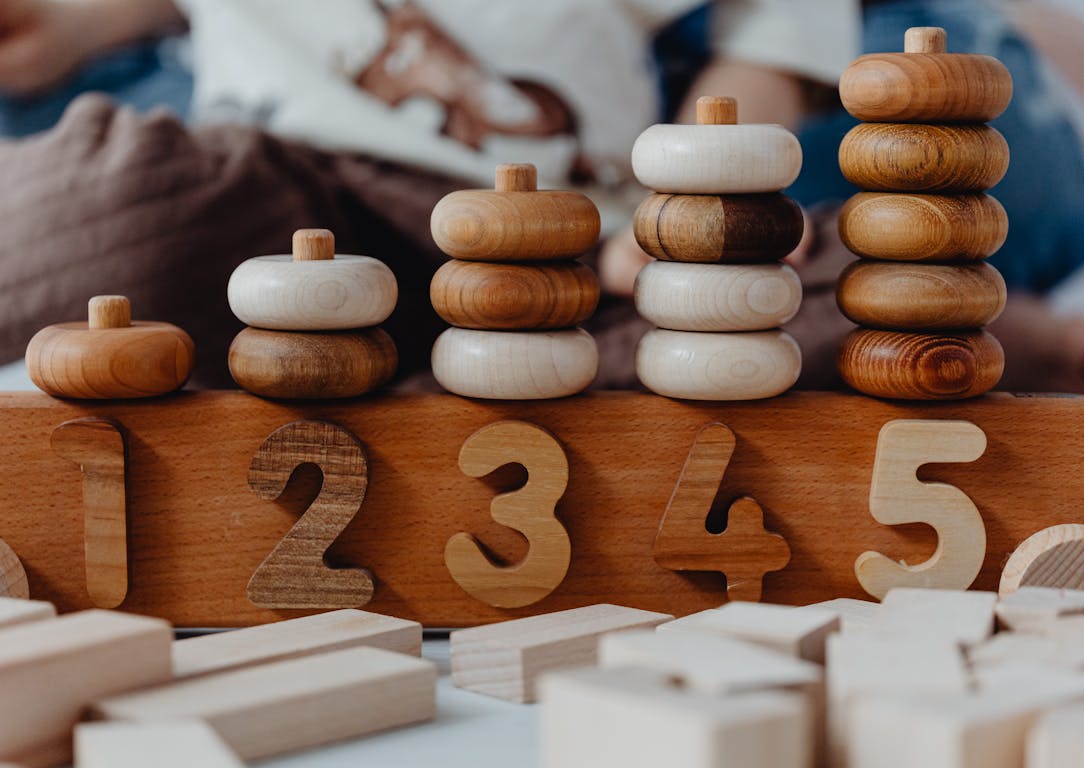
Montessori uses purpose designed materials that allow children to physically work with concepts. This helps children understand ideas deeply, rather than memorising facts.
Children work at their pace
Some children move quickly through certain concepts, others need repetition. Montessori makes room for both. Children are not rushed, and they are not held back either.
Classrooms are usually mixed age
Montessori classrooms often group children in multi age bands. Younger children learn by observing, older children build confidence by helping and leading. It supports social development naturally.
Educators guide learning through observation
Montessori educators spend a lot of time observing. They introduce lessons at the right time, step in when needed, and support children to build independence.
What Montessori looks like day to day
A Montessori day is built around a work cycle, a long uninterrupted period where children can concentrate, choose activities, and go deep into their learning.
This is where children develop:
- focus and concentration
- independence and responsibility
- confidence through mastery
- problem solving skills
- strong routines and self management
Montessori also includes group lessons, social learning, outdoor time, creative work, and opportunities for collaboration. It is not a silent room of individual work. It is a community where children learn to work independently and alongside others.
Montessori and child led learning
You will often hear Montessori described as child-led learning. That is true, but it is important to understand what that means. Child-led does not mean unstructured. It means the child has ownership within a structured environment. Children are guided toward meaningful work, they follow routines, and they are supported to make good choices.
This approach helps children develop intrinsic motivation. They learn because learning feels meaningful, not because they are trying to avoid being wrong or keep up with everyone else.
Montessori vs traditional education
Many parents compare Montessori with traditional schooling when deciding what is right for their child.
Traditional classrooms often move as a group through the same tasks at the same time. Montessori classrooms allow for more flexibility, where children can progress when they are ready and spend longer where they need support.
In practice, Montessori can be a strong fit for children who:
- thrive with hands on learning
- benefit from calm structure and routine
- enjoy working independently
- need time to build confidence
- are naturally curious and want to explore
The best way to understand the difference is to see it in action.
Is Montessori education right for every child?
Every child is different, and the best learning environment is one where a child feels safe, supported, and capable.
Montessori can suit a wide range of children because it supports independence while still providing boundaries and guidance. Children who are confident often enjoy the freedom to extend themselves. Children who are quieter can build confidence through routine, repetition, and steady progress.
What matters most is a well run Montessori environment with trained educators and a consistent approach.
Taking the Next Step
Learn More About Montessori Education in Perth
If you are exploring Montessori education and would like to understand how it compares to traditional schooling in practice, speaking directly with the school can be a helpful next step.
You are welcome to contact Blue Gum Montessori School to learn more about their learning approach, curriculum and enrolment process, or to request further information.