

Junior Primary Montessori: What to expect in the First Few Weeks

Junior Primary Montessori: What to expect in the First Few Weeks
Starting at a new school is a big step, both for children and for parents.
If you’re considering Montessori education, it’s natural to wonder how your child will settle in and what those first few weeks might look like. While every child adjusts at their own pace, Montessori environments are designed to support a calm, gradual transition into learning.
Rather than expecting children to adapt immediately, the focus is on helping them feel comfortable, confident, and ready to engage.
A Gentle Transition Into the Environment
The first few weeks in a Montessori classroom are intentionally slower paced.
Children are not rushed straight into structured learning. Instead, they are given time to explore the space, understand how the classroom works, and become familiar with the materials.
During this period, children begin to:
- Explore The Classroom At Their Own Pace
- Observe How Other Children Work
- Become Comfortable With Their Surroundings
- Build Trust With Their Educators
This approach helps reduce overwhelm and creates a strong foundation for learning.
Building Confidence Through Routine
Montessori classrooms are consistent and predictable, which plays an important role in helping children settle.
As children spend more time in the environment, they begin to understand the rhythm of the day. Simple routines become familiar, which builds confidence and independence.
Over time, children learn:
- Where Materials Are Kept
- How To Choose An Activity
- How To Complete And Return Work
- How To Move Calmly Through The Space
These small, repeated actions quickly help children feel capable and secure.
Learning Social Cues and Expectations
Montessori classrooms are typically made up of mixed age groups, which creates a natural learning environment.
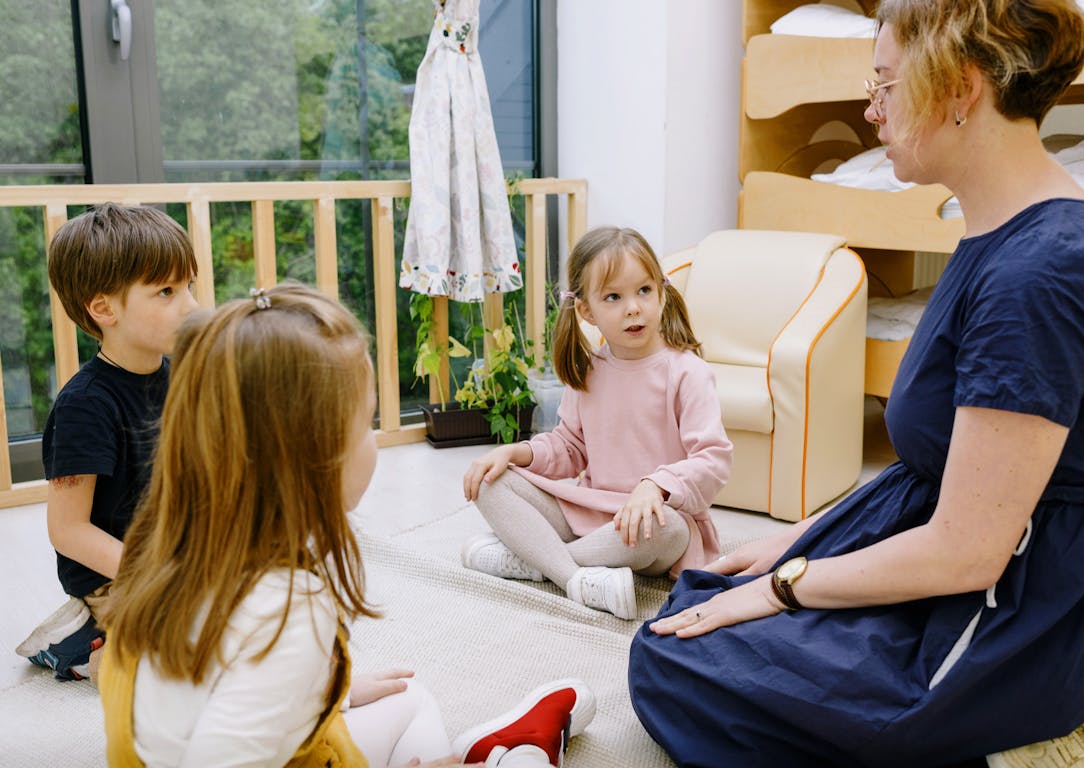
In the early weeks, it’s common for children to spend time observing before actively participating. This is an important part of the process.
Children begin to:
- Watch How Others Engage With Activities
- Understand Classroom Expectations
- Learn How To Interact Respectfully
- Build Confidence Before Joining In
This gradual social development helps children feel more comfortable and connected.
Developing Independence at Their Own Pace
Independence is a key part of Montessori education, but it is introduced gently.
Children are encouraged to make choices and take responsibility for their work, but always with guidance and support from educators.
In the early weeks, this might look like:
- Choosing Between A Small Number Of Activities
- Completing Simple Tasks Independently
- Asking For Help When Needed
- Taking Pride In Their Work
Some children adapt quickly, while others take more time. Both are completely normal.
Communication Between School and Home
The transition into Montessori is a shared process between school and home.
During the first few weeks, educators will often provide updates and reassurance as children settle into the environment. This helps parents understand how their child is progressing and what to expect next.
Open communication allows:
- Parents To Feel Informed And Reassured
- Educators To Support Each Child More Effectively
- A Strong Partnership Between School And Family
What Parents Might Notice
As children begin to settle, parents often notice small but meaningful changes.
These can include:
- Increased Independence At Home
- Improved Focus And Concentration
- Greater Confidence In Daily Tasks
- A Growing Interest In Learning
It’s also normal for some days to feel smoother than others. Adjustment takes time, and every child’s experience will be slightly different.
Giving It Time
One of the most important things to understand is that settling into Montessori is a process, not a single moment.
Children are not expected to adjust immediately. With consistency, support, and a calm environment, most children gradually become comfortable and engaged.
Patience during this stage makes a significant difference in how confidently children move forward.
Seeing the Transition Firsthand
While it’s helpful to read about the Montessori approach, the best way to understand it is to see it in action.
Observing a classroom provides a clear picture of how children move through their day, how educators guide them, and how the environment supports learning.
Taking the Next Step
Learn More About Montessori Education in Perth
If you are exploring Montessori education and would like to understand how it compares to traditional schooling in practice, speaking directly with the school can be a helpful next step.
You are welcome to contact Blue Gum Montessori School to learn more about their learning approach, curriculum and enrolment process, or to request further information.